新闻中心
NEWS CENTERHere is an astonishing fact: during the summer of 2024, mini games actually outspent traditional app-based mobile games in the industry's most expensive and competitive user-acquisition market.
DataEye reported on September 16 that, in August, mini games spent an estimated RMB 94 million per day on user acquisition across the two leading advertising platforms. That exceeded the RMB 90 million daily spend of app-based mobile games during the same period, making mini games the biggest buyer of paid traffic that month.
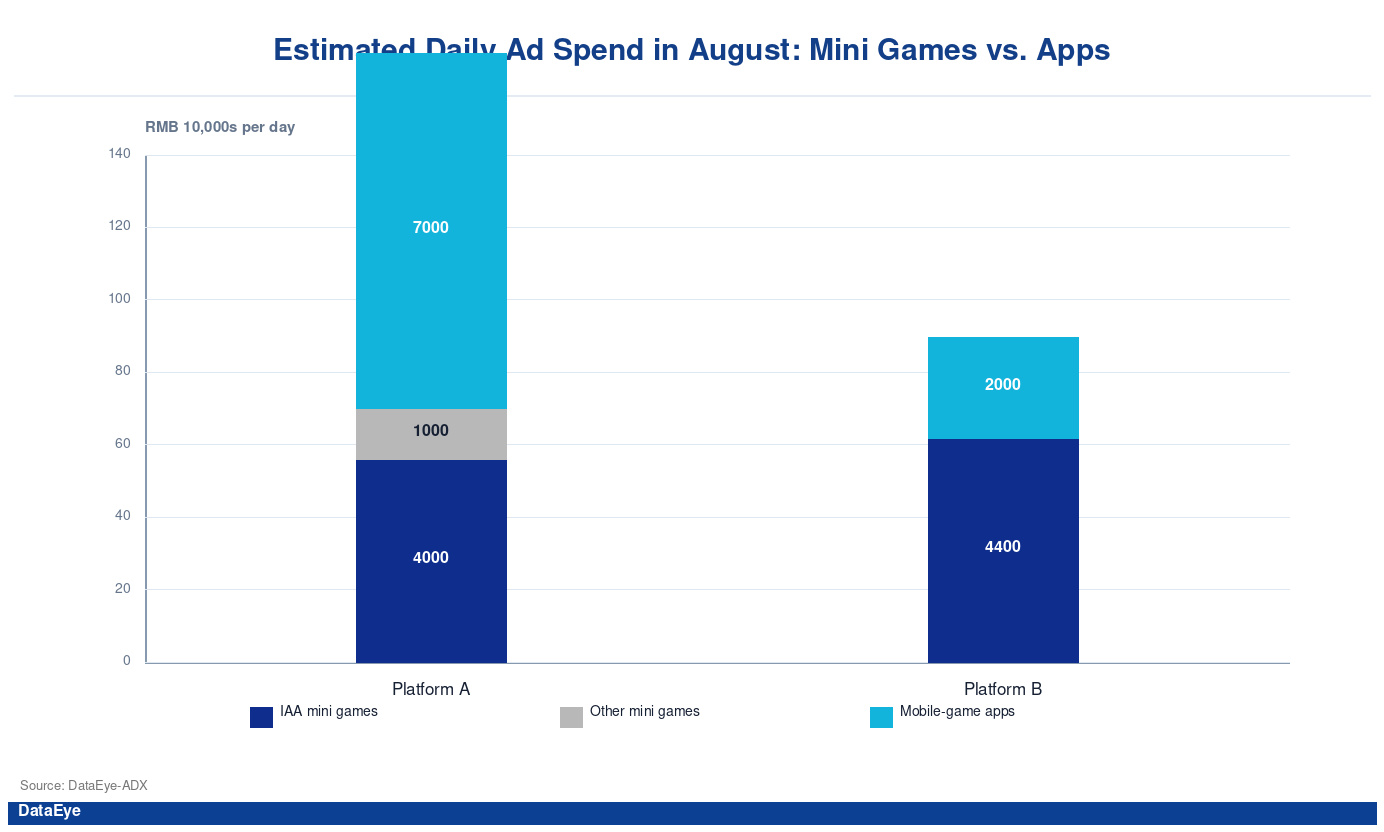
The more closely you examine this, however, the stranger it looks. Mini games have long been known for low user-acquisition costs and should not, in theory, have found themselves burning cash in a battle with app-based games. Yet their higher daily spend suggests that competition in this segment may already have escalated beyond what outsiders can easily understand.
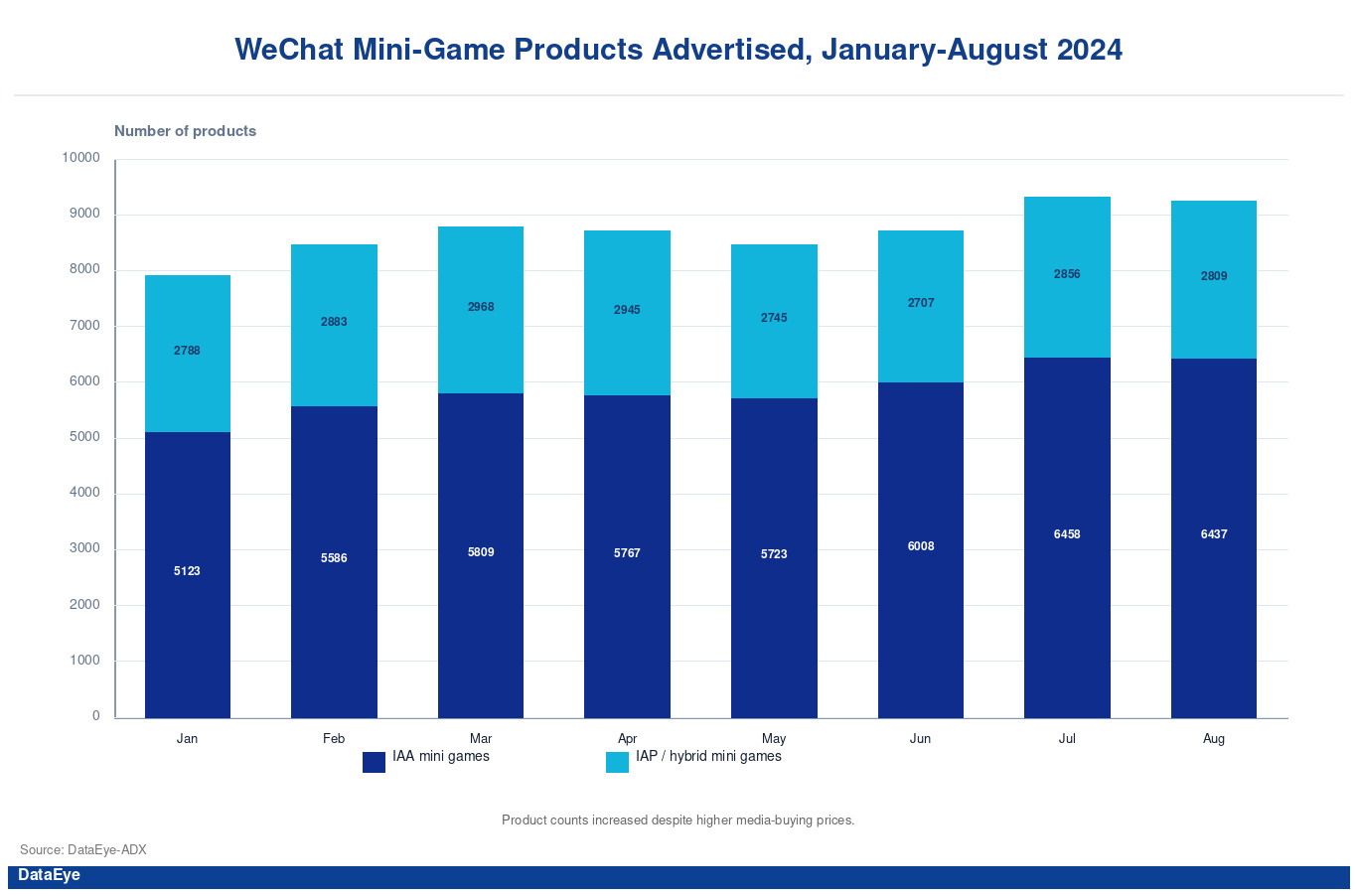
Other data supports that conclusion. A report released early this year showed that the number of companies entering the WeChat mini-game market grew 141% in 2023. A producer at a leading mini-game studio told me that capital inflows had pushed the acquisition cost of a paying user in some popular genres into four figures. The media-buying advantage on which mini games once prided themselves is rapidly disappearing.
There are, of course, two sides to every story. Behind the intense competition among leading companies, 2024 also appears to be a crucial turning point for mini games. Industry attention, the benefits that mini-program platforms return to developers, and investment by major companies have all reached unprecedented levels.
Against the backdrop of this market surge, a ranking titled China's Top 100 Mini-Game Companies 2024 recently attracted considerable industry attention. It not only ranks the leading companies in the market, but also categorizes them by city and product type.
Using the Top 100 as a guide, let us examine a mini-game market that is more challenging - but also more promising - than ever in 2024.
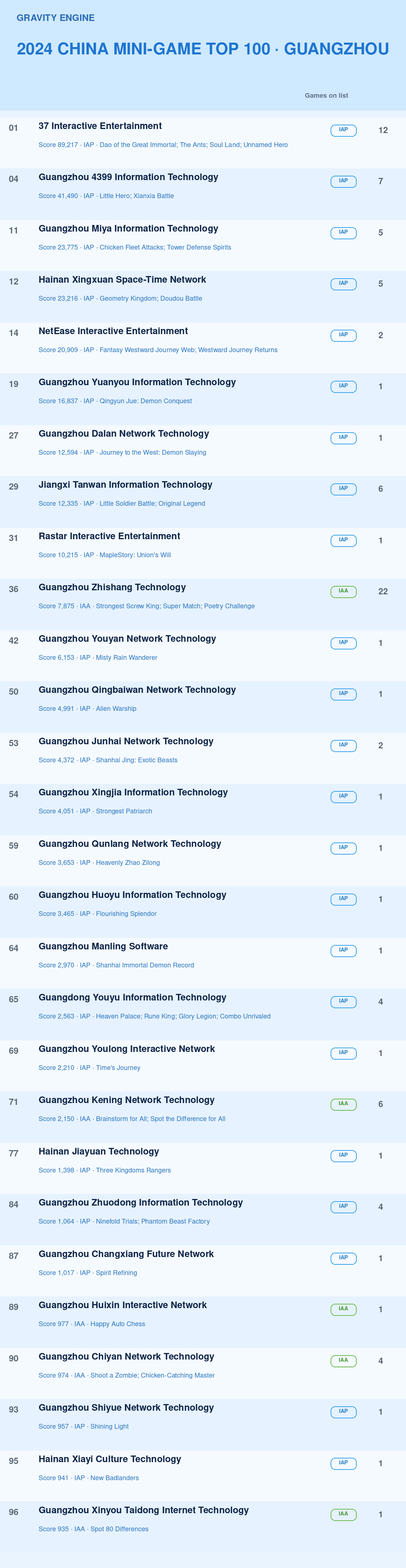 (Click to enlarge the original ranking.)
01
The Midyear Battle for Mini Games
Guangzhou and Shenzhen Account for Nearly Half of the Top 100
The Top 100 contains a daunting volume of information, but the complicated picture becomes easier to understand when we begin with the geographic distribution of the companies on the list.
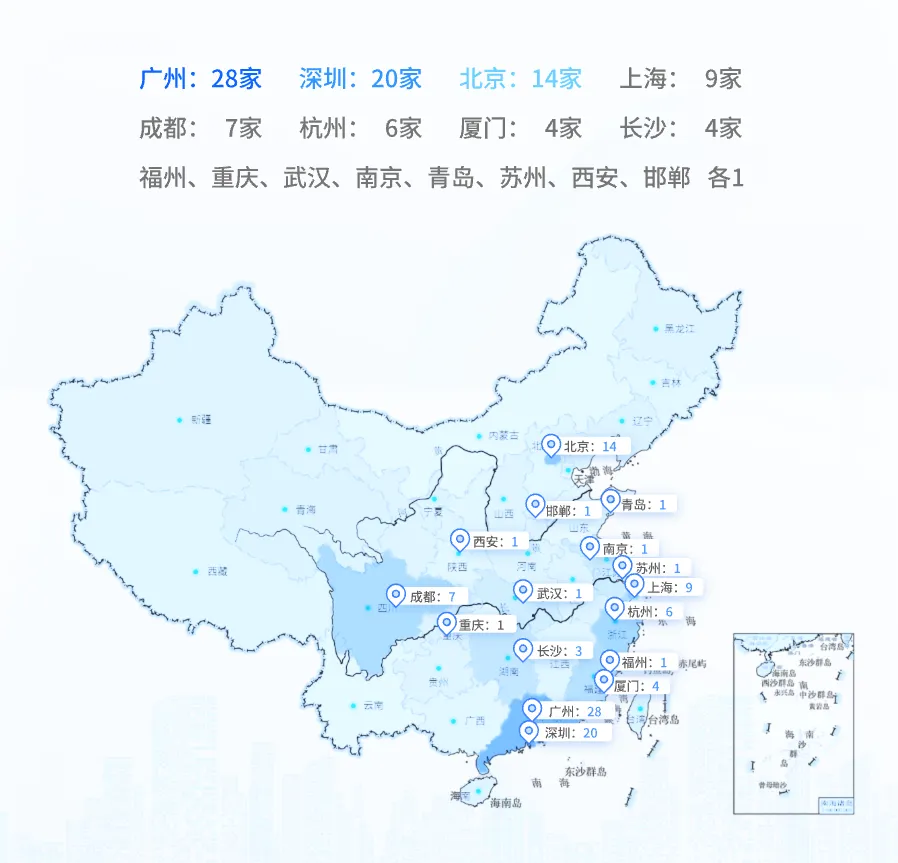
Our first stop is Guangzhou, home to 28 of the Top 100. As the center of the mini-game industry in South China, the city is populated by many established companies that have operated since the browser-game era. Guangzhou studios therefore tend to excel at traffic operations and are adept at launching new products through diversified media-buying strategies.
 (Click to enlarge the original ranking.)
Consider 37 Interactive Entertainment, whose distinctive Guangzhou-style operating playbook has helped it hold the No. 1 position in the ranking. Since embracing mini games across its business in 2023, the company has used strong in-house development and publishing capabilities to sustain substantial revenue growth.
According to 37 Interactive Entertainment's 2024 interim report, strong performances from mini games such as Dao of the Great Immortal and Soul Land: New World helped both revenue and net profit rise. Operating revenue reached RMB 9.232 billion, up 18.96% year on year. Behind that growth, however, was nearly RMB 5 billion in internet traffic expenses.
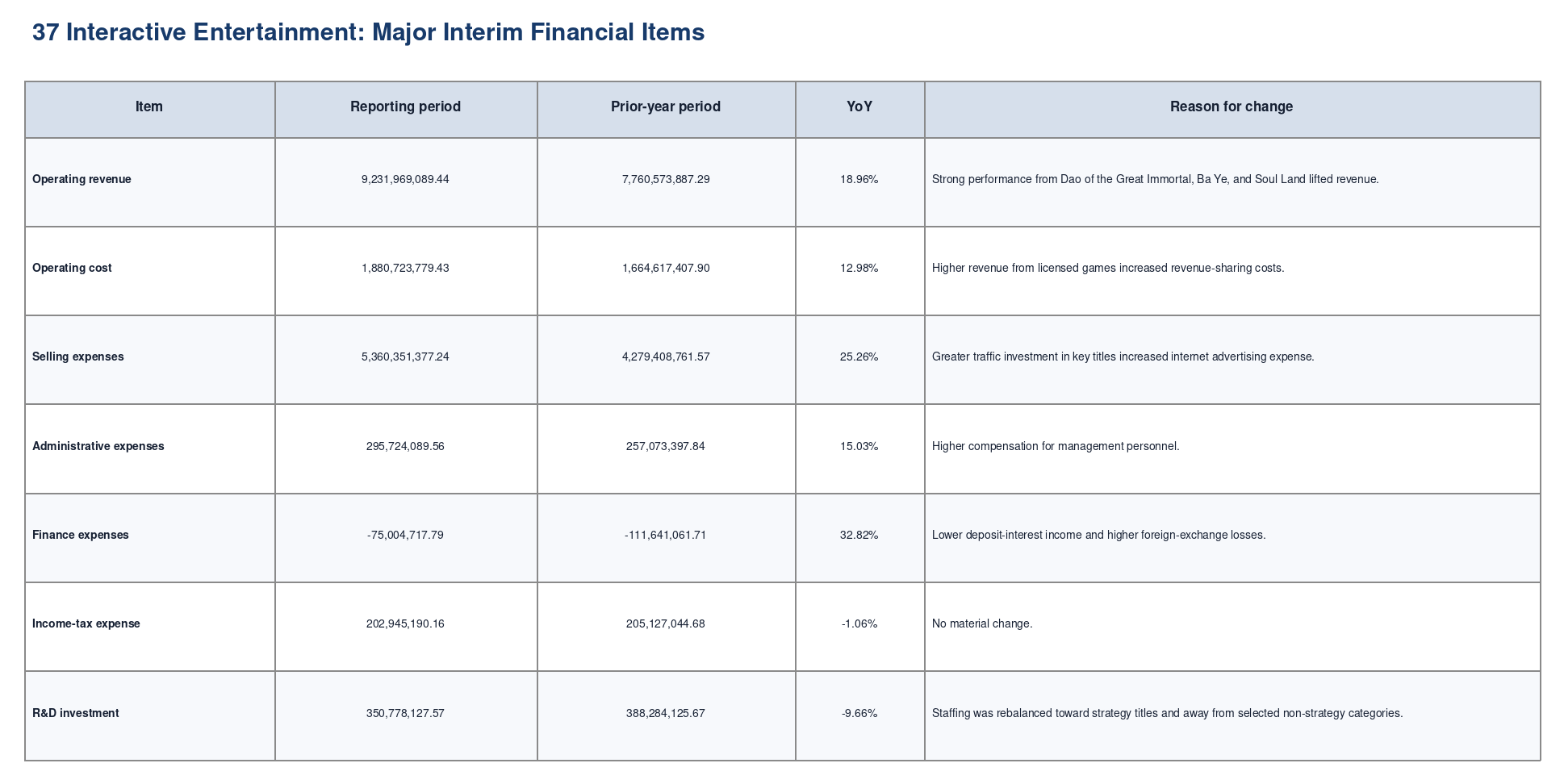 (Its selling expenses also rose sharply, increasing 25.26%.)
37 Interactive Entertainment repeatedly expressed confidence in mini games in its financial report. The company believes that global entertainment preferences are becoming increasingly fragmented in 2024. Against that backdrop, the growing number of mini-program games in China is meeting demand for lighter and more diverse entertainment while bringing new vitality to the games industry.
Guangzhou-based 4399, ranked fourth, has also broken through with an aggressive user-acquisition strategy. DataEye shows that Legend of Mushroom was the leading title in its category by overseas advertising volume during the first half of 2024. It ranked first among overseas RPGs by creative volume and third across all overseas mobile-game advertising creatives.
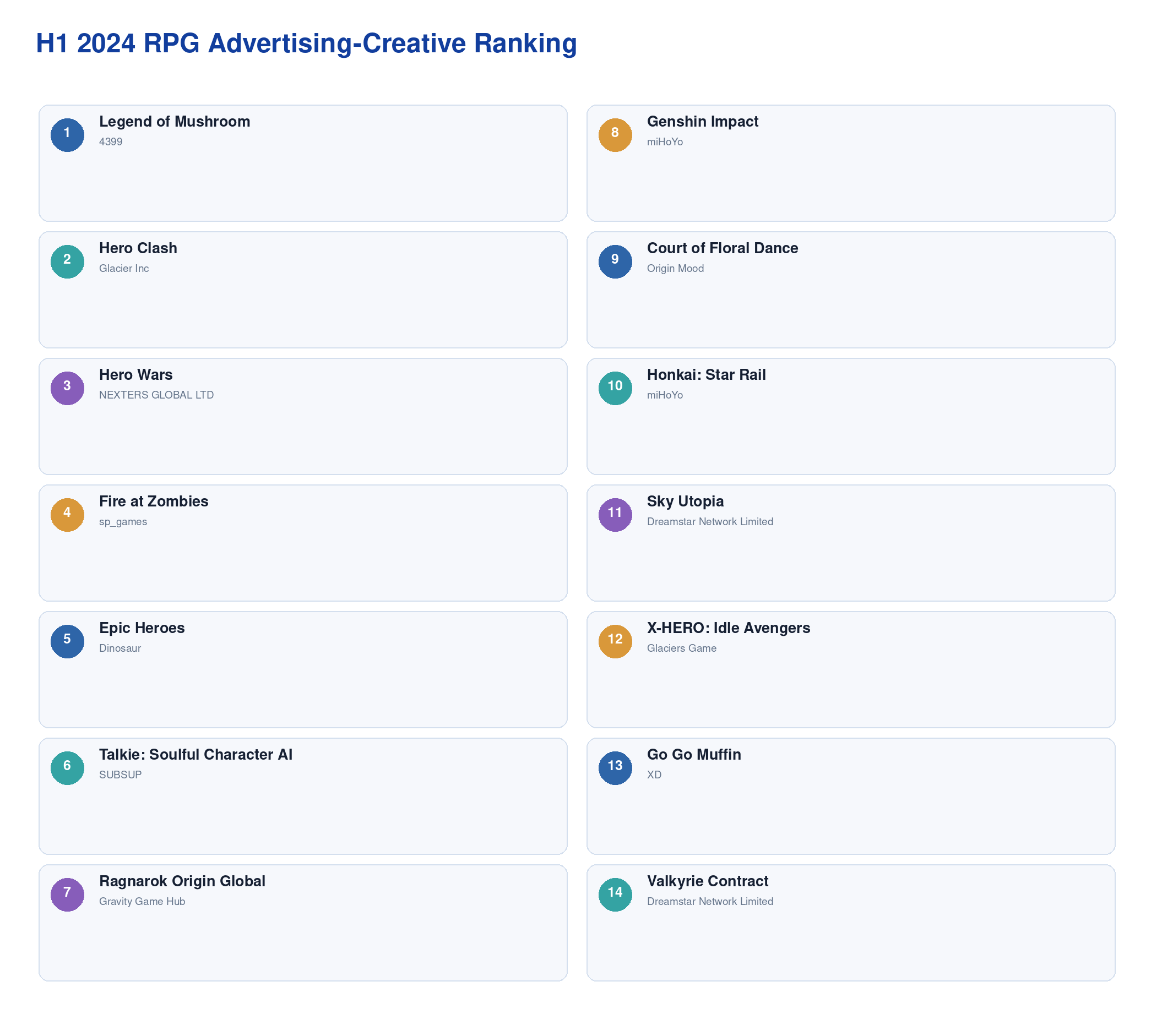 (Source: DataEye)
These traffic-acquisition campaigns helped Legend of Mushroom generate more than USD 100 million in both Japan and South Korea. It ranked first and second, respectively, for mobile-game revenue growth in those two markets during the first half of 2024 and earned USD 370 million overseas.
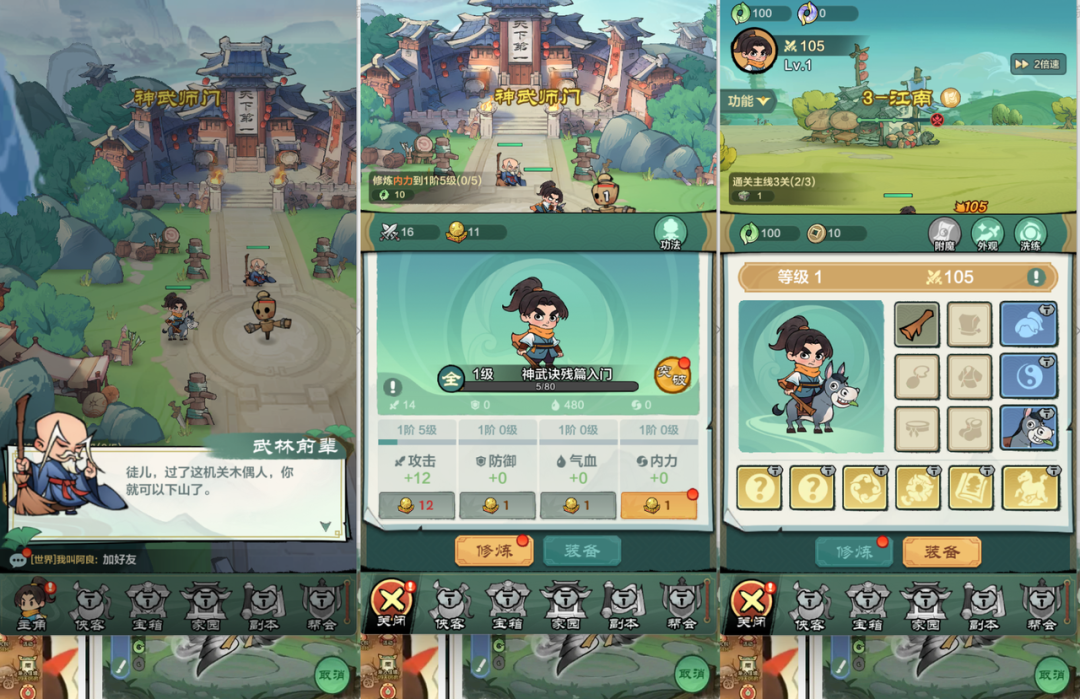
Following that major overseas success, 4399's midyear release Little Hero also demonstrated considerable ambition. Within 45 days of launch, its advertising-creative volume ranked 14th among mini-game products measured over the preceding 90 days. After validating the product, 4399 stepped up spending in July; the title ranked fourth by monthly ad spend and repeatedly entered the top five of WeChat's mini-game best-seller chart.
If Guangzhou's mini-game companies are all-rounders with both development and publishing capabilities, the Shenzhen companies that help the two cities claim nearly half of the Top 100 are masters at breaking through with innovative gameplay.
(Click to enlarge the original ranking.)
Anyone familiar with popular mini-game formulas will recognize that many innovative mechanics first achieved commercial success in the hands of Shenzhen developers.
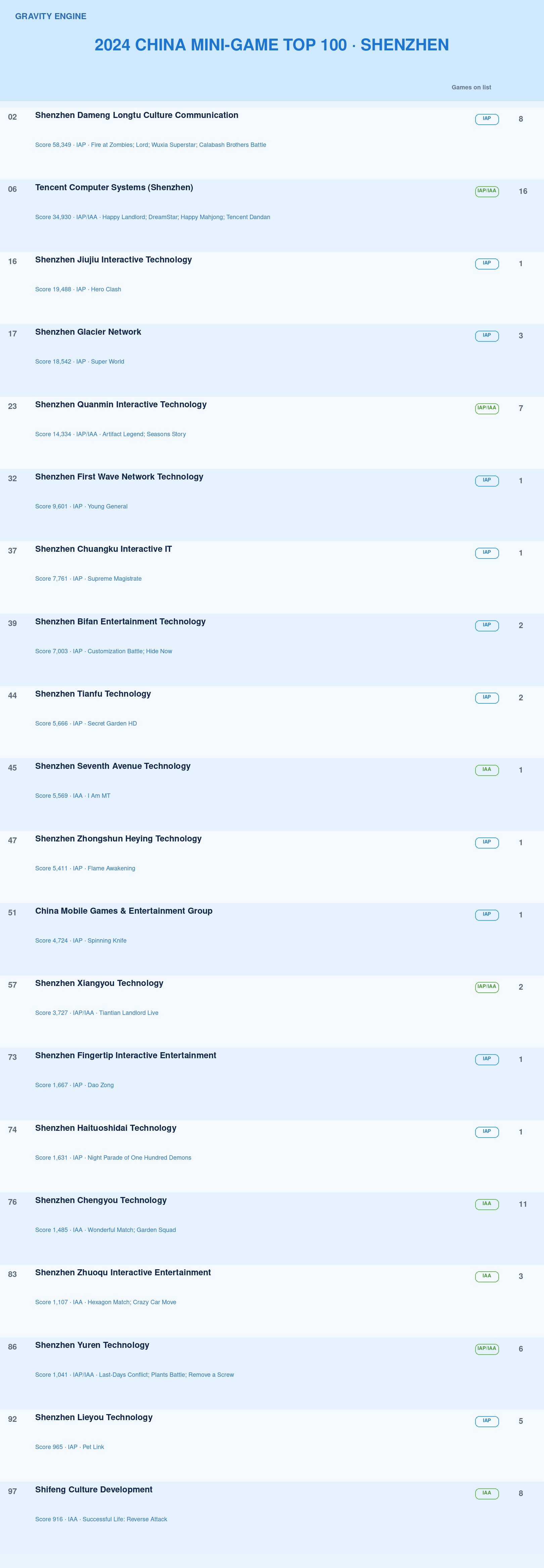
Take Dameng Longtu, the highest-ranked company in Shenzhen. After King's Intent, also released under the title Bang-On Target, went viral in China and abroad early this year, the pioneer of the tower-defense-plus-roguelike mini-game formula launched a second title in the same mold, Fire at Zombies. Both its mini-game and app versions delivered strong results.
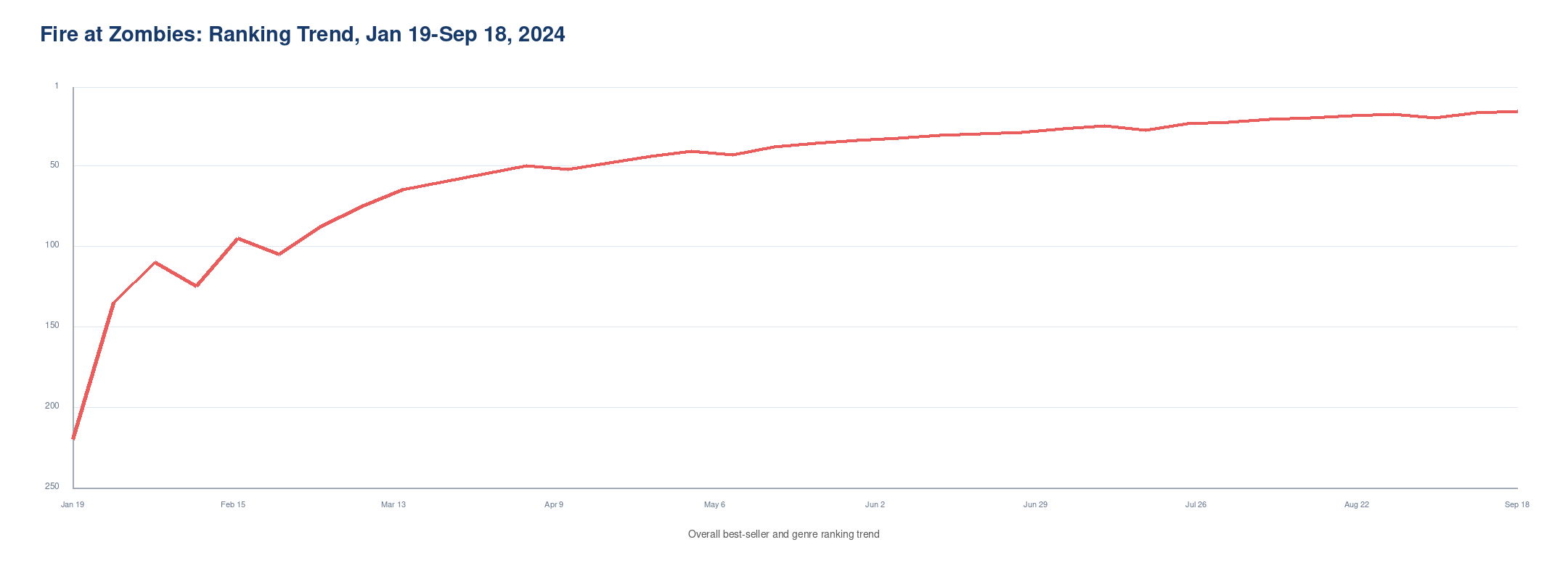
Third-party estimates show that after the app version launched on January 19, its monthly iOS gross billings exceeded RMB 70 million by April, while estimated revenue across all platforms surpassed RMB 150 million. By April, Fire at Zombies was holding around the top 20 of the iOS best-seller chart, making it one of the few titles this year to succeed in both mini-game and app form.
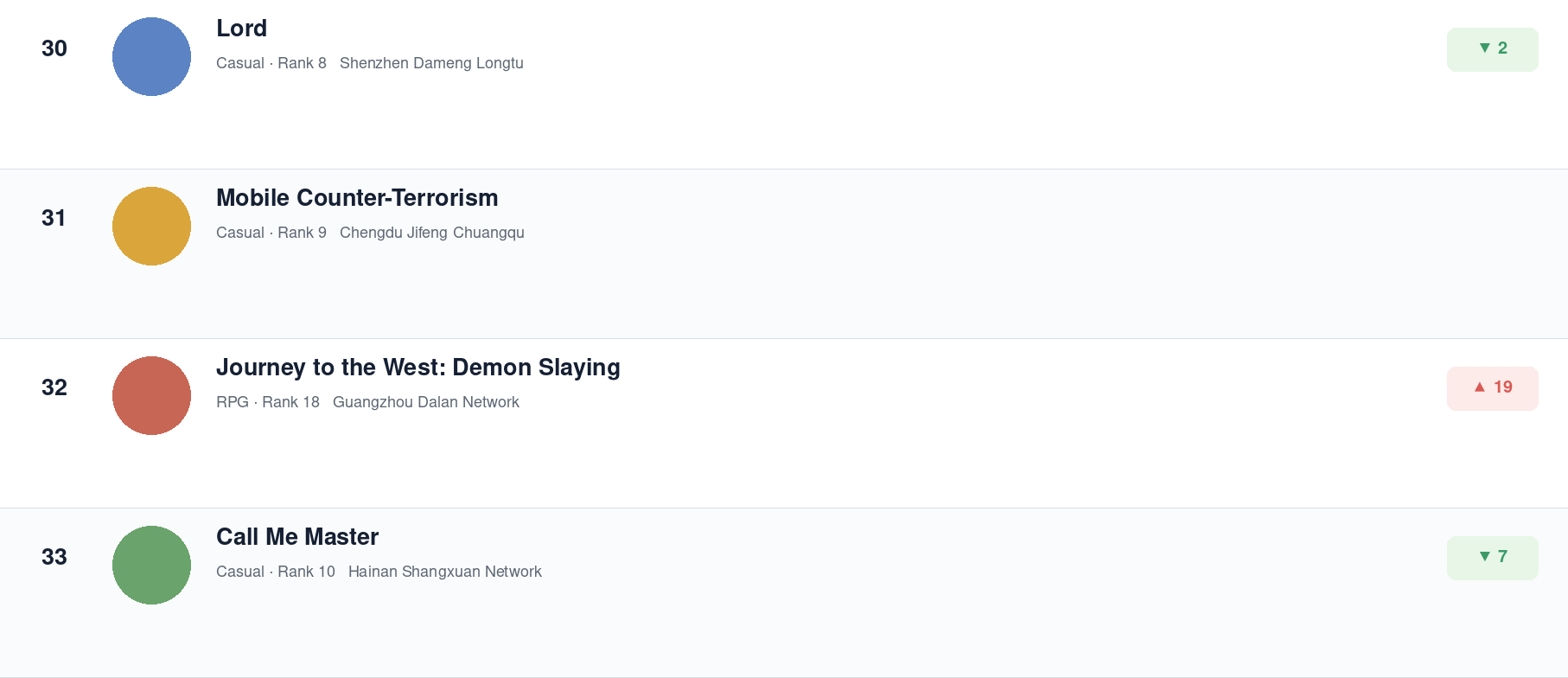
The company moved just as quickly when the tense merging mechanics of Lucky Defense became popular. Dameng Longtu combined those mechanics with its own ideas to launch Lord, a Lucky Defense-like title. The game entered WeChat's top 30 best-seller chart immediately after release, demonstrating how rapidly the company responds to promising new gameplay.
Shenzhen-based Jiujiu Interactive, ranked 17th in the Top 100, has been no less impressive.
With Hero Clash, Jiujiu Interactive took the Rumble Heroes-like formula to a new level. After first entering WeChat's top 100 best-seller chart in February, the team spent only one month refining the product before it climbed to No. 2 - one place behind Dao of the Great Immortal.
Jing Xu, Vice President of Jiujiu Interactive, previously described Hero Clash as a model of making complex games lighter and casual games deeper. From the outset, the project was built around the core appeal of RPGs. It delivered a large map, exploration, and adventure while keeping controls light enough to fit the habits of mini-game users.
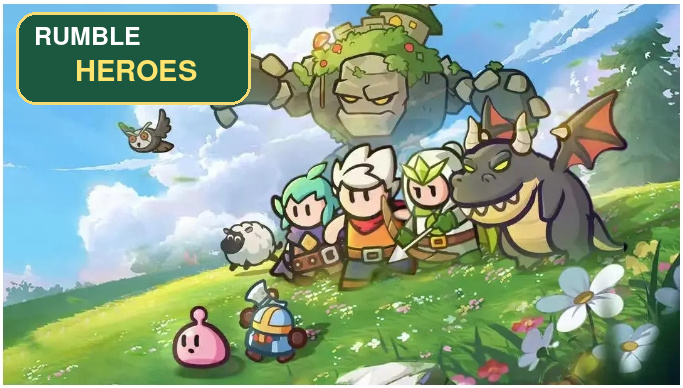
Building on that design, Jiujiu Interactive used a customized marketing strategy tailored to the game's mechanics to expand its reach. The result was the first fully realized Rumble Heroes-like title to emerge after Rumble Heroes itself.
02
Giants Gather
What Secrets Are Beijing and Shanghai Hiding?
Having looked at the distinct strengths of Guangzhou and Shenzhen in user acquisition and gameplay, we now turn to Beijing and Shanghai, where many of the industry's biggest names are concentrated.
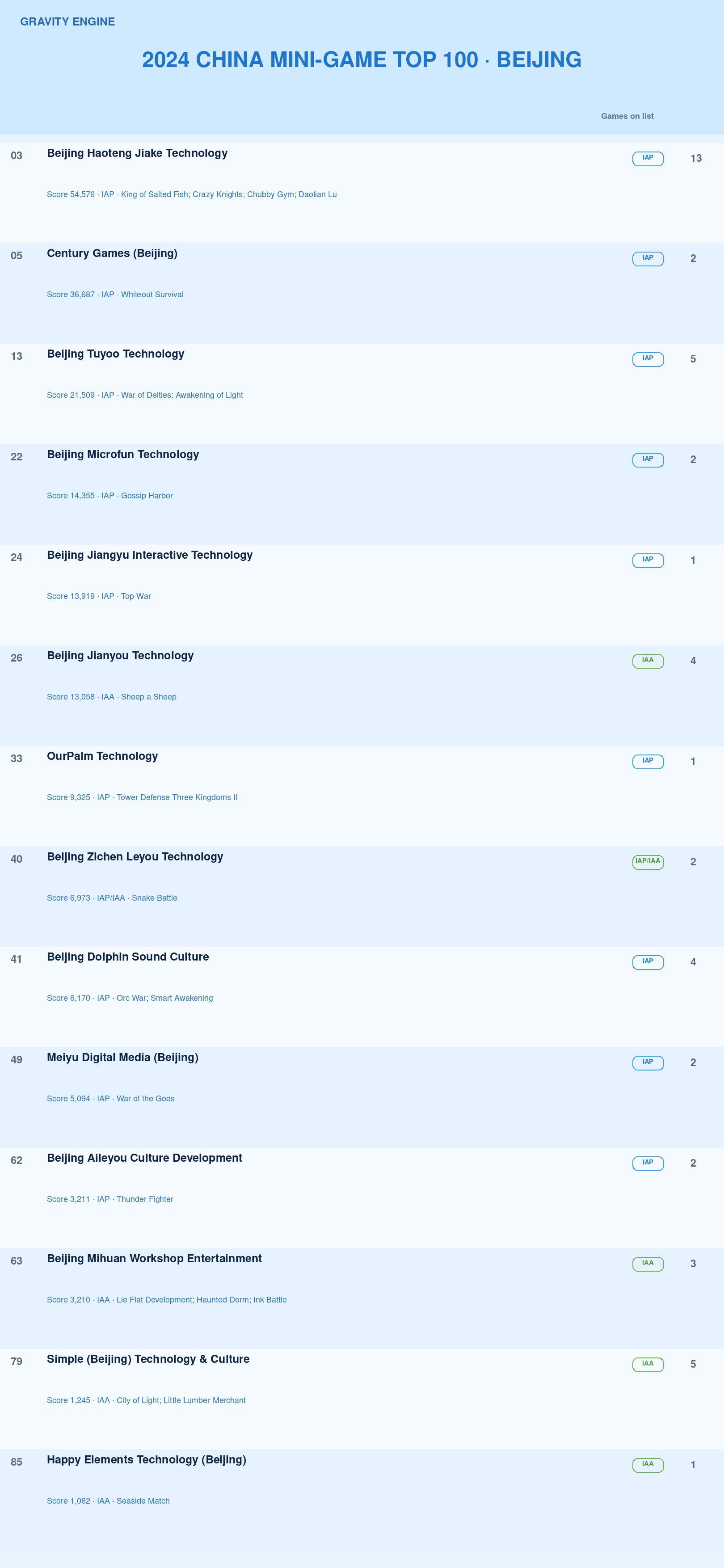
(Click to enlarge the original ranking.)
Beijing occupies a special place in the mini-game industry. Sheep a Sheep, developed by Jianyou Technology, ignited the market in 2022. Haoteng Jiake's King of Salted Fish pioneered the salted-fish-like and chest-opening formulas. Century Games' Whiteout Survival succeeded overseas before returning to China. Beijing-based companies have led industry trends repeatedly. This year, the WeChat Mini Games Open Course even returned to Beijing specifically to strengthen engagement with developers in northern China.
This also confirms that Beijing has never lacked successful game companies, especially veterans with extensive experience in overseas markets. In the new year, I have noticed a growing number of Beijing companies bringing internationally successful products back to the domestic market.

Consider Whiteout Survival from Century Games. Sensor Tower data shows that the title set new monthly-revenue records in both China and overseas markets in August. AppMagic estimated August revenue at USD 91 million. The result lifted Century Games' monthly revenue by 15% and placed it among the top three Chinese mobile-game publishers by revenue for the first time.
In China's mini-game market, the domestically adapted version of Whiteout Survival had topped WeChat's mini-game best-seller chart for four consecutive months by the time of publication. DataEye estimated that its mini-game gross billings may have reached approximately RMB 300 million in June, indicating that Century Games' app-to-mini-game strategy has achieved early success.

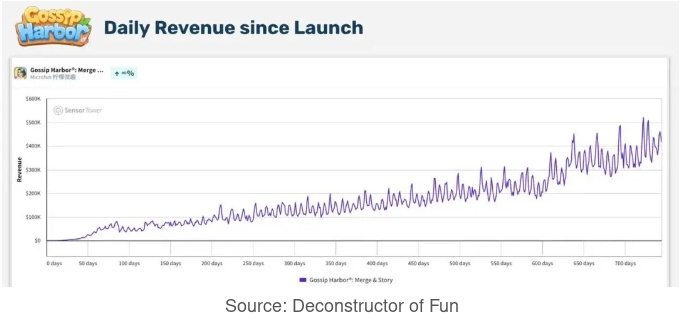
Just when Whiteout Survival seemed impossible to top, Gossip Harbor from Shenzhen-based Microfun produced an even more dramatic growth curve.
 (Source: Deconstructor of Fun)
Since Microfun released Gossip Harbor in 2022, the title has grown with remarkable stability overseas, following a line that seems to rise almost continuously. According to Deconstructor of Fun, the game's average daily gross revenue is now approximately USD 535,000, implying annual revenue of around USD 195 million.
Gossip Harbor also began the reverse journey from overseas markets back to China early this year. After entering the top 15 of WeChat's best-seller chart in June, it remained firmly within the top 30 through publication, with a steady upward trend.
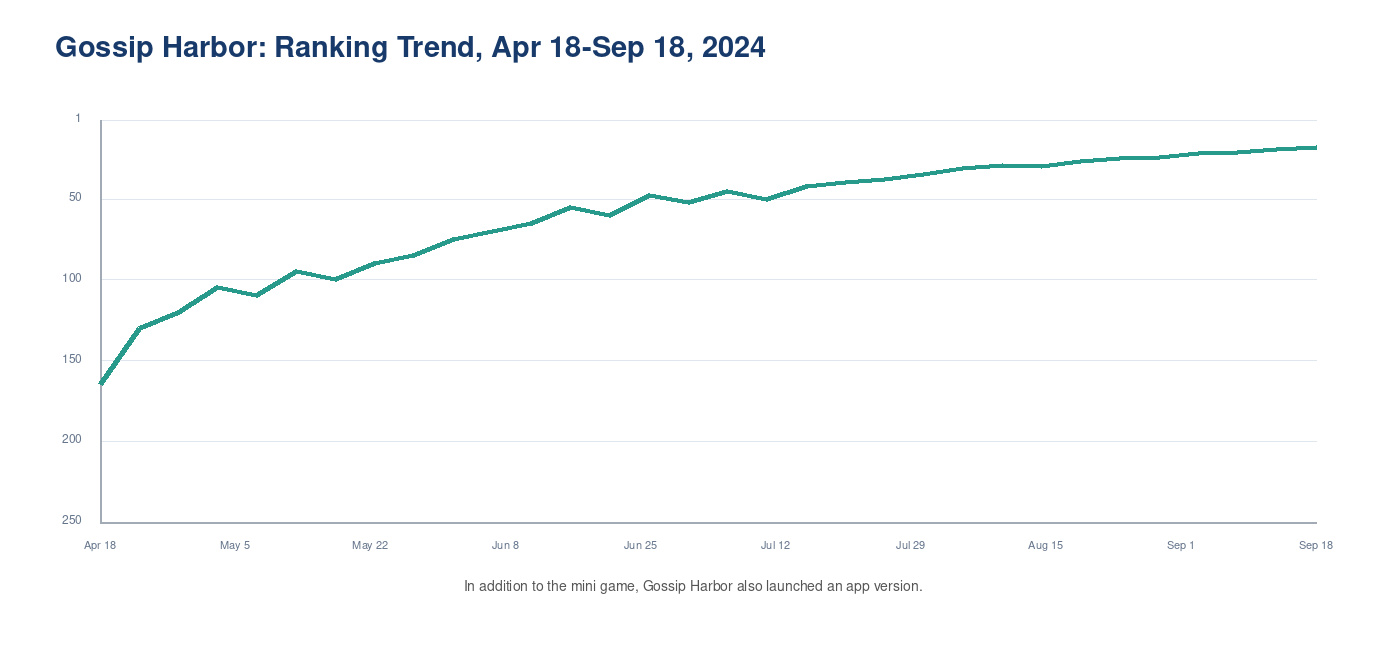 (In addition to the mini game, Gossip Harbor also launched an app version.)
Unlike Beijing, whose companies often pursue both domestic and overseas markets, Shanghai's mini-game sector is still in its early stages and is advancing cautiously, one step at a time.
The number and product types of Shanghai companies in the ranking show a strong focus on China and the wider Asian market. Proven genres such as Chinese fantasy, xianxia, and Legend-style games run through almost the entire list. These companies have also chosen the lower-risk, faster-payback IAP model almost without exception, signaling a determination to proceed conservatively.
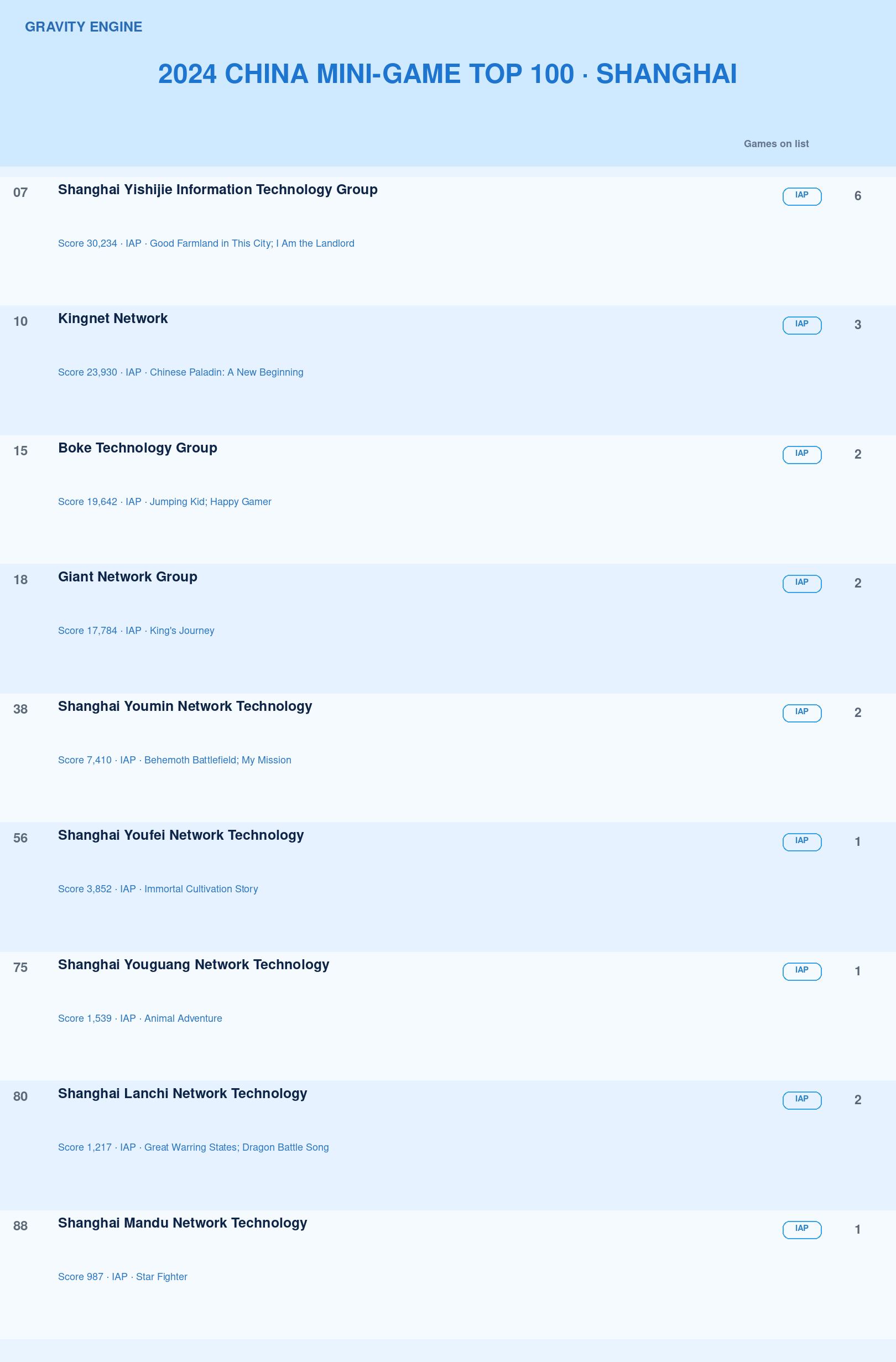 (Click to enlarge the original ranking.)
The reasons for Shanghai companies' cautious approach are not difficult to understand. First, the city's high costs put greater pressure on projects to recoup their investment. With expensive development and long production cycles, mid-tier mini-game revenue may not sustain ongoing operations unless a team is confident it can reach the top of the market. One exception is Yishijie, whose game division is based mainly in Guangzhou and can therefore operate more aggressively.
Second, Shanghai's industry culture and creative strengths do not align naturally with the demands of mini games. Mini games and traditional app-based titles target distinctly different audiences. Developers accustomed to anime-style or high-specification products cannot simply transfer years of project experience to the new format on a one-to-one basis. As a result, few of Shanghai's leading studios have entered the mini-game market.
That began to change as companies released their 2024 interim reports, with a growing number of Shanghai studios signaling plans to increase investment in mini games.
Kingnet Network, ranked 10th in the Top 100, noted in its financial report that it had departed from its usual publishing strategy for Chinese Paladin: A New Beginning and chosen to enter the mini-game market first.
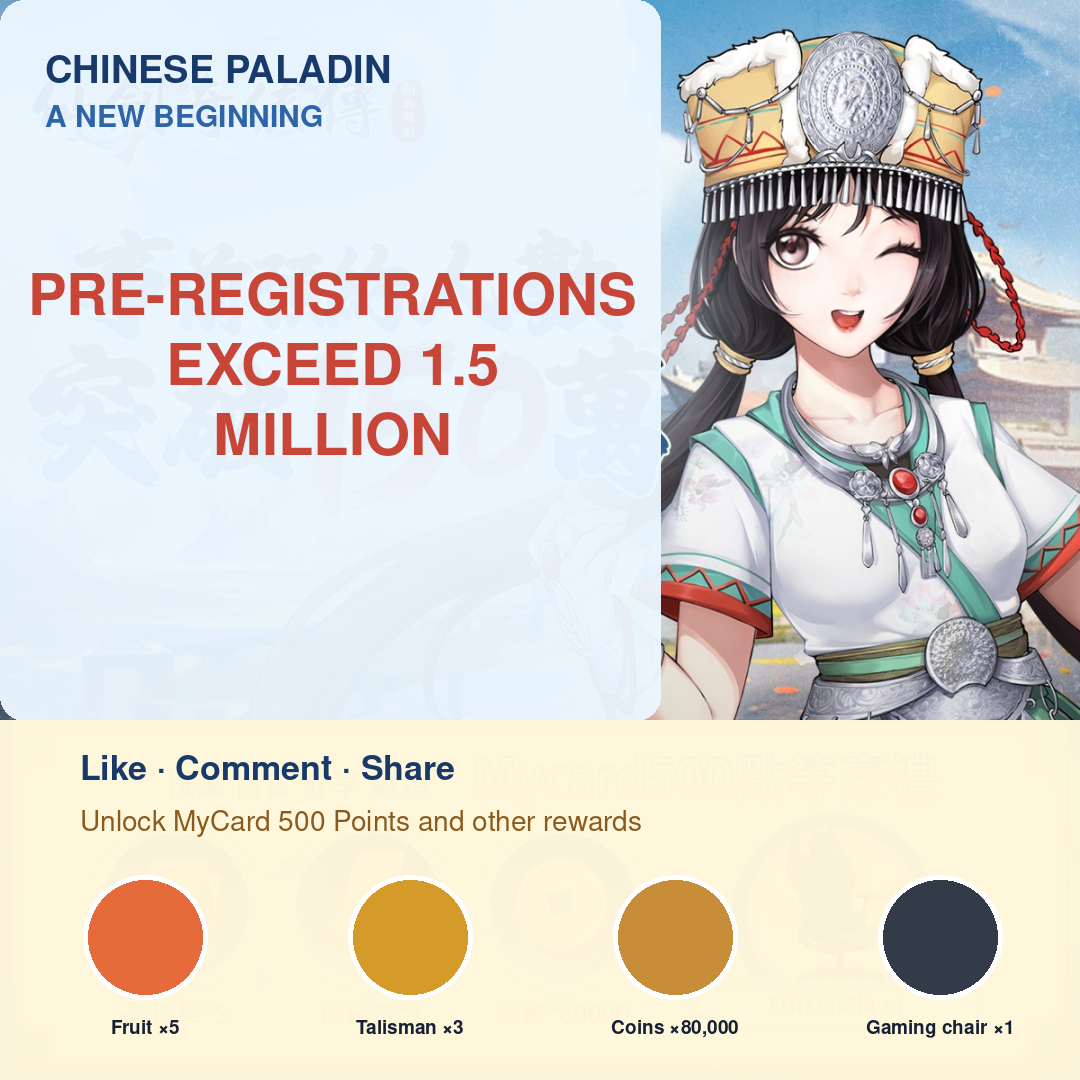 (Chinese Paladin: A New Beginning also launched in Hong Kong, Macao, and Taiwan on July 21 and delivered strong results.)
After Giant Network, ranked 18th, benefited from converting King's Journey from app to mini-game form, it began user testing for a mini-program version of Original Journey. The project team plans to continue polishing the game and increase paid user acquisition in the second half of the year based on test results.
Giant Network also emphasized the economic contribution of mini games in its interim report. Supported by the strong launch of King's Journey and stable operations across mature product lines, the company generated operating revenue of RMB 1.427 billion, broadly unchanged year on year.
As more companies earn meaningful returns from mini games, some Shanghai studios that previously kept their distance are beginning to reconsider. As the market and industry continue developing, game companies from more regions are likely to join this expanding sector.
03
Deeper Anxiety
The Challenge of Shrinking Mini-Game Dividends
We have now reached the end of the story behind the Top 100 mini-game companies. As I worked slowly through the list, a question emerged: if these 100 companies appear so successful, what does the darker side of the market - the part no ranking can capture - actually look like? Is the industry really as healthy as the companies' financial reports suggest?
I do not want to spoil the mood, but it is worth ending with some harder realities. Opportunity and risk always coexist. The same market dividend that can lift a mini game to tens of millions in gross billings can also burn through even a well-funded company's reserves.
Since the beginning of this year, I have frequently heard industry discussions about the future of mini games. Several widely circulated long-form essays independently estimated that the dividend would last only three to five years. At G-bits' interim-results briefing, an investment institution even asked directly whether mini games represented a large long-term market opportunity or merely a temporary traffic dividend.
Such questions are not groundless. Although the mini-game market has already reached meaningful scale and still offers broad room for growth, its growth curve is gradually flattening. Several of the advantages that industry participants once celebrated are beginning to fade.
First, the information and insight advantage created during the market's immature early stage has largely been absorbed by major companies.
This cognitive dividend refers to the edge companies could once gain through little-known experience and information asymmetries while the mini-game market was still developing.
Many companies have now built mature, repeatedly validated methods for greenlighting and publishing projects. At a closed-door mini-game conference in the middle of the year, practitioners shared well-developed AIGC-plus-mini-game solutions, including technologies that can substantially shorten development cycles and are already in practical use.
At the WeChat Mini Games Conference in July, small and medium-sized companies openly demonstrated self-developed programs for automating bid-based advertising. According to one speaker, the algorithm could independently optimize campaigns to produce returns in the tens or even hundreds, far outperforming an ordinary media buyer.
After years of exploration and trial and error, proven methods and tools that fit the logic of the market are spreading rapidly. Opportunities to gain a first-mover advantage through experience and information asymmetry will become much rarer. When mini games eventually mature to the same degree as conventional mobile games, everyone will hold the same tools and stand at the same starting line. At that point, the cognitive dividend will naturally disappear.
Second, the paid user-acquisition dividend so prized by companies is fading alongside the market's development.
Anyone familiar with performance marketing knows that acquisition prices in leading genres have risen sharply since capital-heavy companies led by 37 Interactive Entertainment and Haoteng expanded their product pipelines in 2023. In today's popular chest-opening segment, acquiring a single paying user can cost RMB 1,000-2,000. A successful mini game may generate enormous revenue, but it can burn just as much money on user acquisition.
37 Interactive Entertainment's 2024 interim report provides a clear example. Selling expenses, already RMB 4.28 billion the previous year, rose another 25.26% to RMB 5.36 billion during the reporting period. The company attributed the increase to continued growth in traffic investment for games including Dao of the Great Immortal, Unnamed Hero, and Soul Land: New World.
The standardization of advertising creatives is placing additional pressure on the once-low acquisition costs of mini games. After Douyin and WeChat tightened their review of misleading creatives, the strategy of acquiring users for only a few yuan with ads that did not match the product stopped working. Average acquisition prices began converging with those of traditional app-based games, forcing many under-resourced small and medium-sized studios out of the market.
The era of acquiring a user for RMB 3 or RMB 5 is therefore ending, and the strategy of turning cheap paid traffic directly into gross billings will no longer work as it once did.
Finally, as leading genres become crowded and new releases proliferate, the remaining market dividend for mini games will come under further pressure.
Mini games currently depend heavily on building projects around established gameplay templates. Early entrants can stake out territory and enjoy a substantial first-mover advantage, while later companies face obvious disadvantages in acquiring users and market share.
Finding a genuinely new genre is difficult. The limited number of viable segments is becoming increasingly crowded, and nearly every genre proven suitable for mini-game adaptation is already packed with competitors. What was once a blue ocean is turning into an intensely contested market.
The likely outcome of this intensifying competition can already be seen in the anime-style segment of the conventional mobile-games market: large numbers of companies enter, the addressable audience reaches its ceiling, and the Matthew effect grows stronger. After only a few heavily promoted trends, opportunists rushing into the market can leave the ecosystem in pieces.
Do not misunderstand me. I am not arguing that today's mini-game market is hopeless. On the contrary, I strongly recommend that companies still watching from the sidelines consider entering at this point in 2024. Mini games are expanding rapidly, and both WeChat and Douyin are competing to provide incentives. The broader environment has created powerful momentum for the sector this year.
The best time to enter may have been ten years ago; the next best is now. Once today's advantages fade and the mini-game market matures, competition will be far more difficult. Better to act with courage now than look back with regret.